
Madison County Arrest Warrants Explained
An arrest warrant lets officers take someone into custody once a judge finds probable cause. That standard means the judge believes an offense happened and the named person likely committed it. In Madison County, Magistrate Court is the clearest publicly documented place where warrants get issued, though Superior Court and municipal courts also act within their own jurisdiction. The county Magistrate page describes arrest warrants sought both by law-enforcement officers and by private citizens. It also lists first appearances, bonds, extradition, committal hearings, and warrant-application hearings. A private citizen's application is only an allegation. What the paper actually says, not the label, controls.
Madison County Arrest Warrant Applications
The Madison County Magistrate Court page links a Pre-Warrant Application and an Application-Affidavit for a Bad Check Warrant. Its fee schedule lists $40 for a warrant application or pre-warrant process, and $30 for a deposit-account-fraud warrant. Those are application fees only. They are not bond, bail, a fine, or a release price. The Magistrate page also shows the court's jurisdiction and its Government Complex location.
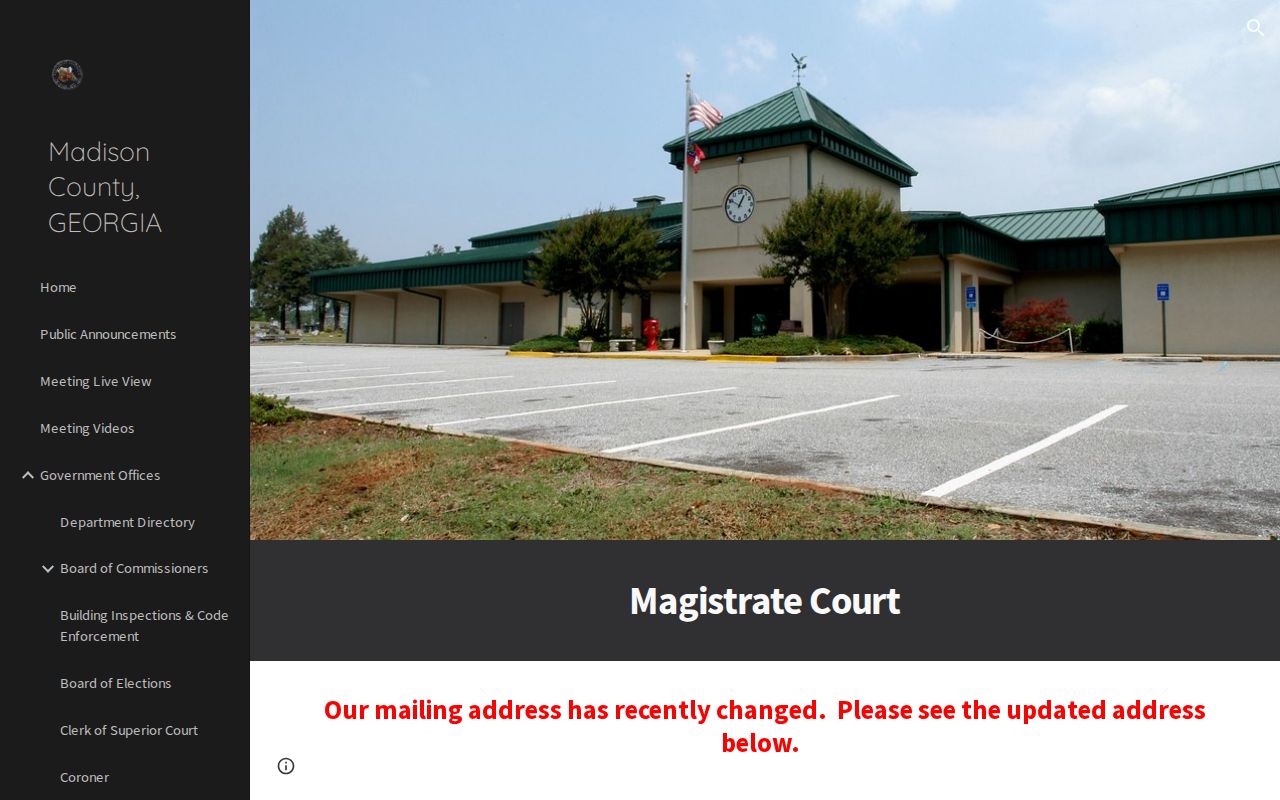
The page identifies the court's function but returns no live arrest warrant results. An application may also be restricted or redacted while an investigation or prosecution in Madison County is still pending.
Inside a Madison County Arrest Warrant
What a Madison County warrant file holds depends on the court and the record. Expect the issuing court, application date, affiant role, alleged offense, statutory citation, warrant type, and bond notation. Service or return entries, a linked case number, and later disposition may appear too. The affidavit itself holds the sworn facts used to seek the order, subject to sealing and access limits.
| Issuing court | The judge and jurisdiction that authorized process |
|---|---|
| Application or affidavit | The request and sworn factual basis, when public |
| Offense | The alleged charge and cited law |
| Bond | A case-specific release notation, if set |
| Service or return | The agency record of execution |
| Status | Active, served, recalled, quashed, or otherwise resolved |
A case identifier like 2026-CR-##### is only a sample format. Use the actual number from the person's Madison County paperwork.
Madison County Arrest Warrant Calls
The sheriff's website has no public arrest warrant name search. The 2026 Georgia Sheriffs' Association directory lists a dedicated Madison County warrant number, 706-795-0808, plus office number 706-795-6202 and 24/7 number 706-795-2101. The directory does not promise the warrant line covers every municipal or out-of-county order. Georgia's official warrant guidance says to contact the sheriff in the issuing county. Have first name, last name, and birth date ready. Ask what else is required, whether status can be given by phone, which court issued the order, and which office handles the next step. Georgia also warns that showing up in person can lead to immediate custody. So call first, and think about getting legal advice before you appear.
Madison County Sheriff
1436 Highway 98 West, Danielsville, GA 30633
Warrant: 706-795-0808
Magistrate Court
91 Albany Avenue, Danielsville, GA 30633
706-795-6375
Serving Arrest Warrants in Madison County
Once a warrant issues, the sheriff is the practical enforcement contact in Madison County. Deputies may serve it directly. Another agency that encounters the person can serve it too. If the subject is outside the county, ask whether that other agency holds the order and how the issuing court wants it handled. Remember, a county inquiry is not a statewide clearance. The sheriff's jail division processes bonds and transports people to court, but the jail is not the answer desk for every pre-arrest question. Start with the warrant line and the issuing court. Ask about custody procedure, first appearance, and where bond gets addressed. And never assume a phone call, records request, or attempted payment stops service.
Madison County Probable Cause Steps
The process starts with sworn facts from an officer or an authorized private applicant. A judge then reviews whether the legal standard is met. If the warrant issues, the court record and the sheriff record grow on separate tracks. The court keeps the application, orders, hearing entries, and disposition. The sheriff may keep receipt, service, execution, and custody material. Madison County Magistrate Court conducts first appearances and committal hearings. A first appearance covers initial custody procedure and rights; a committal hearing tests probable cause and whether a felony matter proceeds. Neither is a trial. Superior Court is the county's broad-jurisdiction felony trial court, and the Clerk of Superior Court keeps its criminal files.
Application → probable-cause review → warrant issuance → service or surrender → first appearance and bond process → case disposition.
Comparing Arrest, Summons, and Bench Warrants
Arrest warrants, summonses, and bench warrants are three different papers. The title on the order and the court that issued it matter more than any casual label. A summons directs an appearance without authorizing the same custody process. A bench warrant usually follows a missed duty in an existing Madison County case.
| Process | Why it starts | First question |
|---|---|---|
| Arrest warrant | Probable cause tied to an alleged offense | Which court issued it? |
| Summons | Direction to appear or respond | What is the due date? |
| Bench warrant | Missed court or other noncompliance | What recall procedure applies? |
The Madison County bench warrant page explains the existing-case route, and in all three cases the actual order controls.
Madison County Arrest Warrant Court Boundaries
Warrants in Madison County come from more than one court. Superior Court handles the felony cases, and its clerk posts criminal calendars. Magistrate Court runs the county's warrant-application and preliminary work. Municipal courts can issue warrants for matters inside city authority. Madison County lists no State Court page in its official county department directory. Probate Court plays a different role, since county sources route traffic-ticket payment and citation help there. Still, the probate database is not an arrest warrant lookup. The Probate Court interface shows that separate counter.
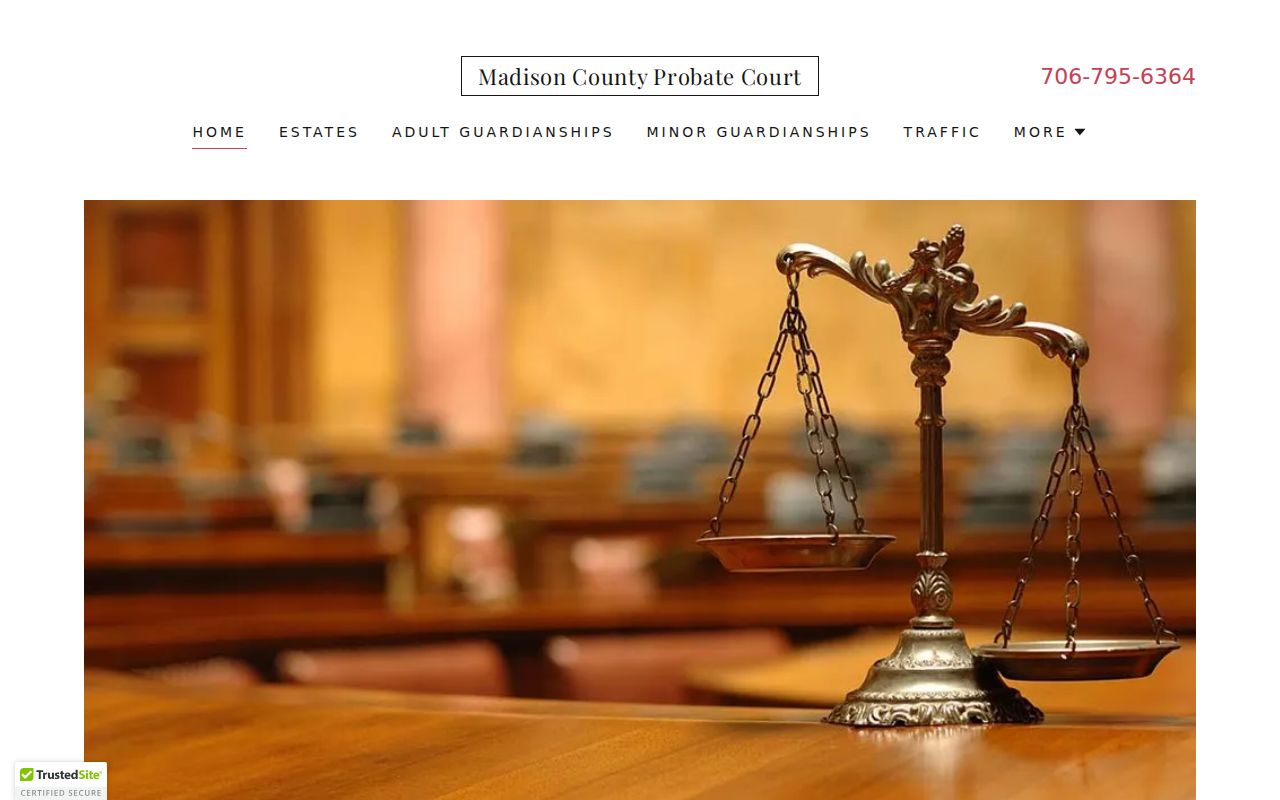
Probate handles traffic and citation paperwork, not a Madison County arrest warrant application. The official site also links a probate records provider.

That records screen is not a sheriff or criminal arrest warrant status system.
If There's an Arrest Warrant for You
No single surrender route fits every arrest warrant. The charge, the court, custody status, and other agency holds can each change the process. The Madison County sheriff explains local law-enforcement procedure. Bond, first appearance, surrender, and any recall request belong with the issuing court or a Georgia lawyer.
- Confirm the person and issuing court with the sheriff’s warrant line.
- Ask the issuing clerk for the case number and next scheduled court event.
- Discuss surrender, first appearance, and bond with counsel or the responsible office.
- Ask whether another county or agency also holds process.
- Keep the disposition, release, bond papers, and final court order.
Act carefully: An in-person warrant inquiry may lead to custody, so confirm procedure and seek legal advice before appearing.
Madison County Arrest Warrant Records
For Madison County sheriff records, use the Open Records Request form. It covers maintained files, not real-time warrant clearance. Name the application, return, service record, or final disposition you want. Bound the date range. Court applications and orders go to the issuing clerk, so ask there for electronic delivery and a cost estimate when available. The Georgia Open Records Act, O.C.G.A. § 50-18-70 et seq., opens records to the public, subject to exemptions. Ongoing investigations, confidential sources, juvenile records, and protected police material may be withheld. A custodian may redact a record or cite the law behind a denial. No agency must build a new arrest warrant database to answer a request. Note: A records response can lag enforcement, so confirm any Madison County arrest warrant with the sheriff and the court.